
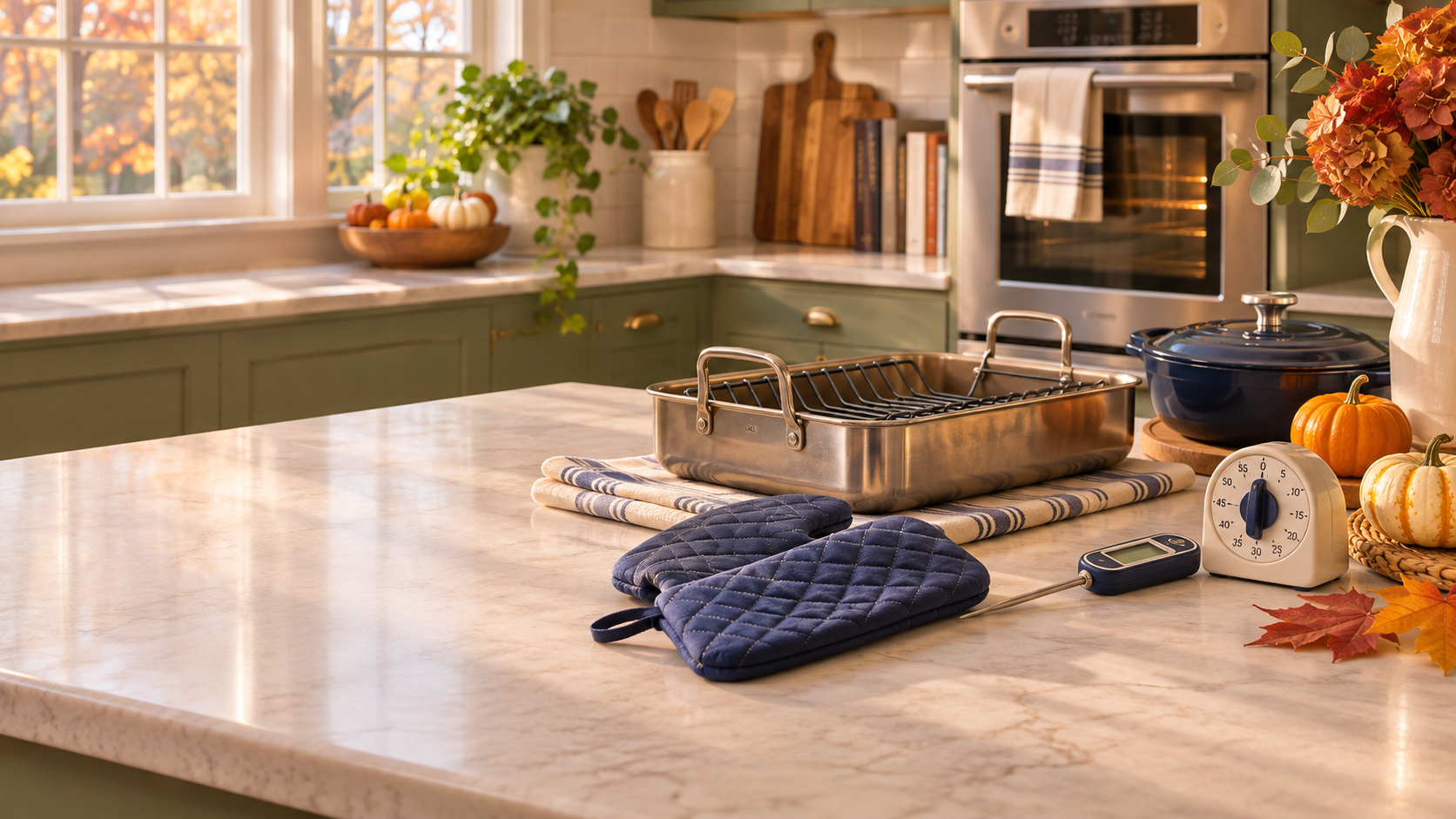
Thanksgiving cooking has a way of filling every burner, every counter, and every minute. The best time to make the kitchen feel easier is before the first casserole goes into the oven.
Set a timer for 20 minutes. This reset will not scrub every cabinet or reorganize the pantry. It creates a clear cooking zone, checks the tools that matter, puts turkey thawing on a safe schedule, and makes room for leftovers. Small setup now can mean a calmer kitchen later.
Minutes 0–5: Clear the cooking zone
Start at the stove and work outward. Move oven mitts, towels, wooden utensils, food wrappers, paper bags, and decorations away from burners and other heat sources. The National Fire Protection Association recommends keeping things that can catch fire at least three feet from the cooking area.
Give hot pans a clear path from oven to counter. Move bags, step stools, pet bowls, and loose rugs out of that route. Choose one sturdy landing spot for the roasting pan and protect the surface before the kitchen gets busy.
Make one simple house rule for the day: children and pets stay at least three feet away from the stove and from areas where hot food or drinks are being carried.
Minutes 5–10: Put the safety tools within reach
Test the smoke alarms nearest the kitchen using the test button. Set out a working kitchen timer and a food thermometer. Put a lid beside any pan that may be used for frying or sautéing.
If a small grease fire starts in a pan, NFPA guidance says to slide the lid over the pan, turn off the burner, and leave the cover in place until the pan has cooled. Never pour water on a grease fire. For an oven fire, turn off the heat and keep the door closed. If there is any doubt, get everyone out and call the fire department.
Thanksgiving is the peak day of the year for home cooking fires in the United States, according to NFPA. Unattended cooking is the leading contributing factor. The practical answer is simple: stay in the kitchen when cooking on the stovetop, stay home while the turkey is roasting, and use timers.
Minutes 10–15: Write the thawing plan
A frozen turkey needs more refrigerator time than many people expect. USDA guidance says to allow about 24 hours for every four to five pounds when thawing in a refrigerator kept at 40°F or below.
A 12- to 16-pound turkey generally needs three to four days in the refrigerator. A 16- to 20-pound turkey generally needs four to five days. Once fully thawed in the refrigerator, the turkey can remain there for one to two additional days before cooking.
Write the turkey’s weight, thaw-start date, and cooking date on a note and place it on the refrigerator. Do not thaw a turkey on the counter. Cold-water and microwave thawing are safe alternatives when done correctly, but the turkey should be cooked immediately after either method.
Minutes 15–20: Make a landing zone for leftovers
Clear one refrigerator shelf and gather several shallow containers. Label them now if that makes the post-meal cleanup easier.
FoodSafety.gov advises refrigerating or freezing perishable foods and leftovers within two hours. Dividing food into smaller portions and shallow containers helps it cool quickly. Refrigerated leftovers are generally best used within three to four days; reheat leftovers to 165°F.
- Start the two-hour timer when the meal is served.
- Portion turkey and side dishes into shallow containers.
- Refrigerate food promptly rather than waiting for it to reach room temperature.
- Mark a “use or freeze” date on the containers.
- Reheat leftovers to 165°F and bring sauces, soups, and gravies to a boil.
One extra decision that makes the day easier
Decide now who is watching the stovetop and who is managing dishes, guests, and the doorbell. “Everyone is keeping an eye on it” usually means no one has clear responsibility.
If you plan to deep-fry a turkey, reconsider the setup. NFPA strongly discourages turkey fryers that use cooking oil because of the risk of severe burns and fire. A safer route is an appliance specifically designed for indoor use and used exactly as directed, or a professionally prepared fried turkey.
A warm kitchen should feel welcoming—not frantic
The heart of the holiday is not a perfect table. It is people feeling comfortable, food being handled safely, and the cook having enough breathing room to enjoy the day.
Twenty calm minutes before the rush can clear the counters, settle the plan, and give the kitchen a much better chance of staying warm in all the right ways.
This article provides general educational information. Follow appliance and food-package instructions, use working safety equipment, and contact local emergency services when needed.
Thinking about buying, selling, or planning your next move? I’m always happy to help you think it through.
Authoritative sources and references
- National Fire Protection Association — Thanksgiving is the leading day for U.S. home cooking fires
- FoodSafety.gov — Turkey Thawing Time
- USDA FSIS — How long can a thawed turkey remain in the refrigerator after thawing?
- FoodSafety.gov — Food Safety Tips for the Holidays
- FoodSafety.gov — Thanksgiving Leftovers for Safe Keeping
- USDA FSIS — What methods of reheating food are safe?
- Virginia Real Estate Board — Advertising by Licensees
- Virginia DPOR — Fair Housing Advertising